From the archive: Behind the 'Scenes'
Posted on 4th Jun 2026 by Sian Williams
Lesbian and gay ‘Scenes’ are often doing exactly what many regeneration authorities have been unable to do for years—creating viable and vital places out of marginalised spaces, says Jules Brown in this article from the November 1998 edition of Town & Country Planning journal.
The lesbian and gay community is not perhaps the first choice of discussion among planners in council corridors, but over the next decade or so, it will begin to emerge into the urban planning arena.
Lesbians and gay men are becoming increasingly visible in urban areas across the country. Our cities host, for example, a growing number of annual open-air celebrations of lesbian and gay pride; usually focused on a particular location — known to some as ‘Scenes’.
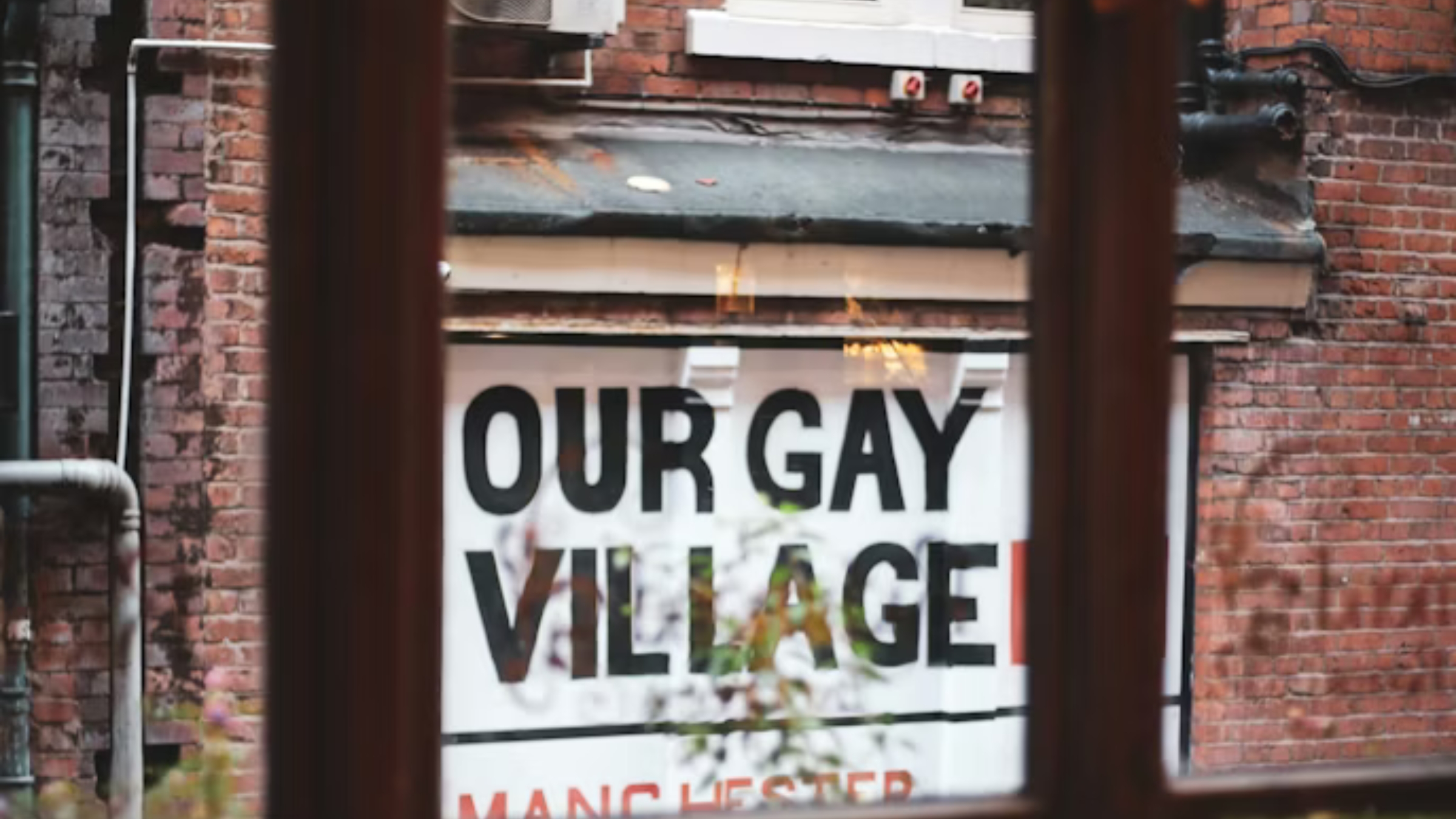
The congregation of lesbians and gay men has been largely invisible throughout urban history, confined by secrecy. Non-spatial, artistic and welfare networks have always flourished in a community bound together by the search for security and
strength; but interaction in urban areas used to be relegated to back rooms behind enigmatic facades, or dangerous encounters in quiet streets.
However, since homosexuality turned ‘gay’ in the 1960s, a combination of sober debate, civil disobedience and tongue-in-cheek exuberance has allowed lesbians and gay men to live more openly in their cities, and it is these rooms and streets that have formed the basis of open and organised interaction in the built environment, forming identifiable lesbian and gay Scenes.
Originally based around pubs and nightclubs, Scenes like those in Blackpool, Brighton and Newcastle upon Tyne are thriving at night and deserted or ‘straight’ during the day. The locations are traditional and predictable — peripheral to the urban centre (security through invisibility); nodal to transport links; marginal to the urban economy (a guaranteed clientele encouraging activity in otherwise unviable localities); and perhaps linked to locations known to the local lesbian and gay community.
But beyond this, the impact that lesbians and gay men are now beginning to have on some UK cities like Manchester, London, Glasgow and Birmingham is more profound — there is a conscious reconfiguration of these Scenes both in terms of increased visibility and stronger clustering, leading to the creation of definable enclaves and even a level of institutional recognition.
First, visibility is being increased in particular through a change in the use and design of accommodation. Gone are the foreboding images of clandestine gay pubs; in come bars with a lack of ambiguity, actively using design as an awareness tool — trendy glass-fronted bars, modern and exuberant styling, and conspicuous signage.
Further, the use of external spaces is becoming more evident. Through pavement seating, overspill space from busy bars, regular open-air celebrations and inventive use of ‘secure’ open spaces such as balconies and gardens, the public spaces of many Scenes are becoming as important to their visibility and vitality as the bars themselves.
Commercial clustering in a Scene’s locality is also increasing, generating a network of complementary or competitive lesbian and gay businesses — taxi firms, restaurants, take-aways, hair salons, fashion shops, and many other services. Such a direction can only engender a more ‘everyday’ feel about these places, encouraging wider place-claiming and a level of territoriality.
Such enclaves are now emerging from previously forgotten quarters of our cities. As well as having definable sexualised identities, they are vibrant, young and desirable assets with an almost guaranteed clientele from a culturally and socially rooted community group. They contain the kind of entrepreneurial ability and potential for regeneration and environmental improvements which could easily form part of the revitalisation strategy for any urban centre.
And all this is concurrent with the maturing exposure of lesbian and gay culture through institutional debate and mass media, creating a new set of societal responses. Familiarity is breeding consent. There must be a response by urban planners to this phenomenon. The political risks of attempting to side-step a vociferous and developing social group and the risks of missing potential benefits for urban centres are both too great to allow planners to avoid the subject.
How could this response he made? Simultaneous uses of space, separated by time or awareness, are traditional characteristics of lesbian and gay Scenes. It is therefore likely that an area planner may be unaware of the importance of what may appear to be only a marginal locality.
A level of lateral thinking is thus a good place to start. The basis of any approach should be an awareness of what goes on in some places after hours, of where lesbian and gay venues exist — in other words an acquaintance with use—values beyond normal land use which are being placed on particular localities by an identifiable local community.
Once there is a recognition that lesbian and gay communities have tangible land use aspirations, it could be possible to include them, at even a cursory level, in forward planning. By entering into dialogue with Scene leaders (for example commercial concerns or welfare groups), it could be possible for planners to begin to reconcile these aspirations with those of the broader locality.
Written recognition of such use-values is some way off for most authorities. However, some, notably Manchester City Council, are actively harnessing the positive benefits to the wider community which are emerging from increased visibility and clustering of their Scenes, and are using them as examples of a pluralistic, metropolitan way of life sought
in cities aspiring to European standards. The relaxed atmosphere, modernity and relative security of lesbian and gay Scenes is attractive to young urban dwellers whatever their sexuality. They could thus contribute greatly to the revitalisation of urban centres, becoming an element of a city’s cultural strategy, and contributing to attempts to achieve the elusive ‘24-hour city’.
As urban regeneration practitioners continue to realise the need for community-led approaches, it will become increasingly apparent that lesbian and gay Scenes have often been doing exactly what many regeneration authorities have been unable to do for years — create viable economic stability and social use-value out of marginalised spaces.
Such a successful community, however ephemerally established, could be a starting point for assessing the regeneration of that locality. Sweeping away use-values cherished by such local communities, either through ignorance or prejudice, will only increase the probability that a societal group of growing visibility will be planned out of the future of its own city — something that this particularly vociferous and proud community would be unwilling to accept without a stand.
Town & Country Planning November 1998.
This article is based on research by the author published as The Lesbian and Gay Communities: Reconciliation in the Built Environment, a Planning Obligation. CHEUE Working Paper 47, Centre for Research into European Urban Environments, Department of Town and Country Planning, University of Newcastle (/SBN 905770 55 2).